
Roots

I’m getting a poly-tunnel (or ‘hoop house’ as they are known in some parts – such a lovely name). I’m excited about the potential to grow more and better tomatoes and cucumbers; plants that like a bit of heat. The current small greenhouse that I inherited with the plot is shaded much of the time and has never really given me the kind of tomato crop I crave – I’m aiming for a glut so that I can make and freeze tomato sauce. My grandparents, who had a huge garden and a very impressive kitchen garden with regular gluts of all sorts of crops, always had bottled tomatoes, which seemed very exotic as a child.
The tunnel is bought and is waiting in bits, ready for the weekend in April when my family will gather and help me construct it – a kind of poly-tunnel party. In the meantime, I need to prepare the ground. The tunnel is going on the site of a current growing bed, which is almost exactly the correct width, but not long enough. There is a slope to cope with and some small retaining walls to sort out at the front corner of where the tunnel will stand. So, I’ve been clearing the ground of accumulated couch grass and other weeds that have established themselves. It’s lovely ground to dig and it was a beautiful sunny morning, with the air full of bird song. The frosty start gave way to a little warmth, which was enhanced by the physical activity. Once I got started, I found a rhythm in the digging and clearing, picking through the soil for the many roots of couch grass and then of bindweed. A robin came and went, swooping in every now and then to grab a tasty morsel. I exposed an ant’s nest when I moved a slab of rock from part of the bed, and they rallied around suddenly in response to the disturbance.
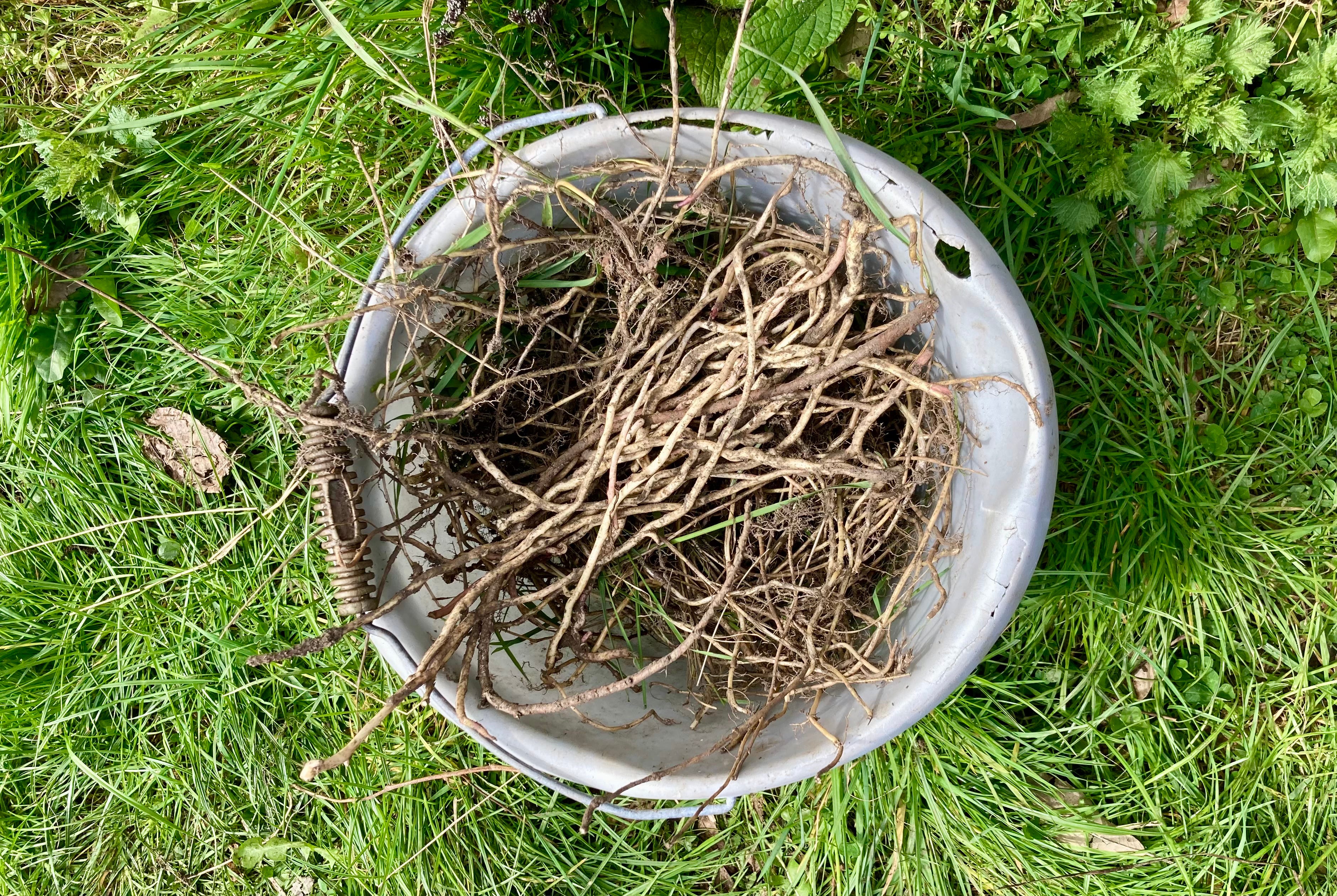
The roots have such different characteristics, and I started thinking about their potential as a material to work with. I know I wrote a little about digging up roots back in December, when I was clearing roots from another of the growing beds. This is the curse (or the magic) of what I do – I can’t just clear an area and simply chuck all the resulting debris on the waste pile. I end up sorting through the roots and putting aside a bucket of the ones that hold the most potential. Maybe they won’t behave as I expect, once they’re dried. But I will have a play with them and see if I can work with them in some way. They are currently soaking in a bucket in the bathroom with the aim of cleaning the rest of the soil off.
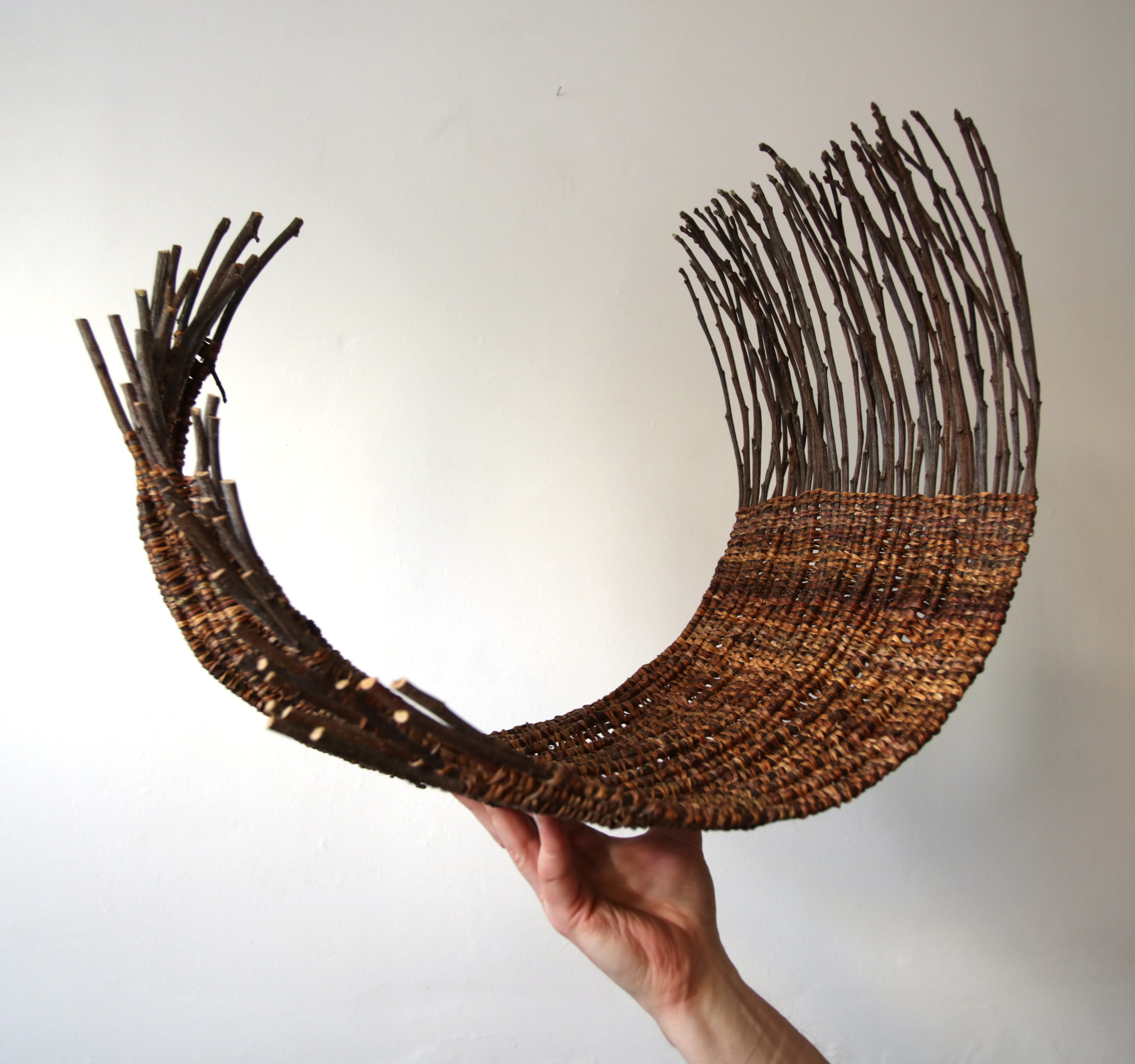
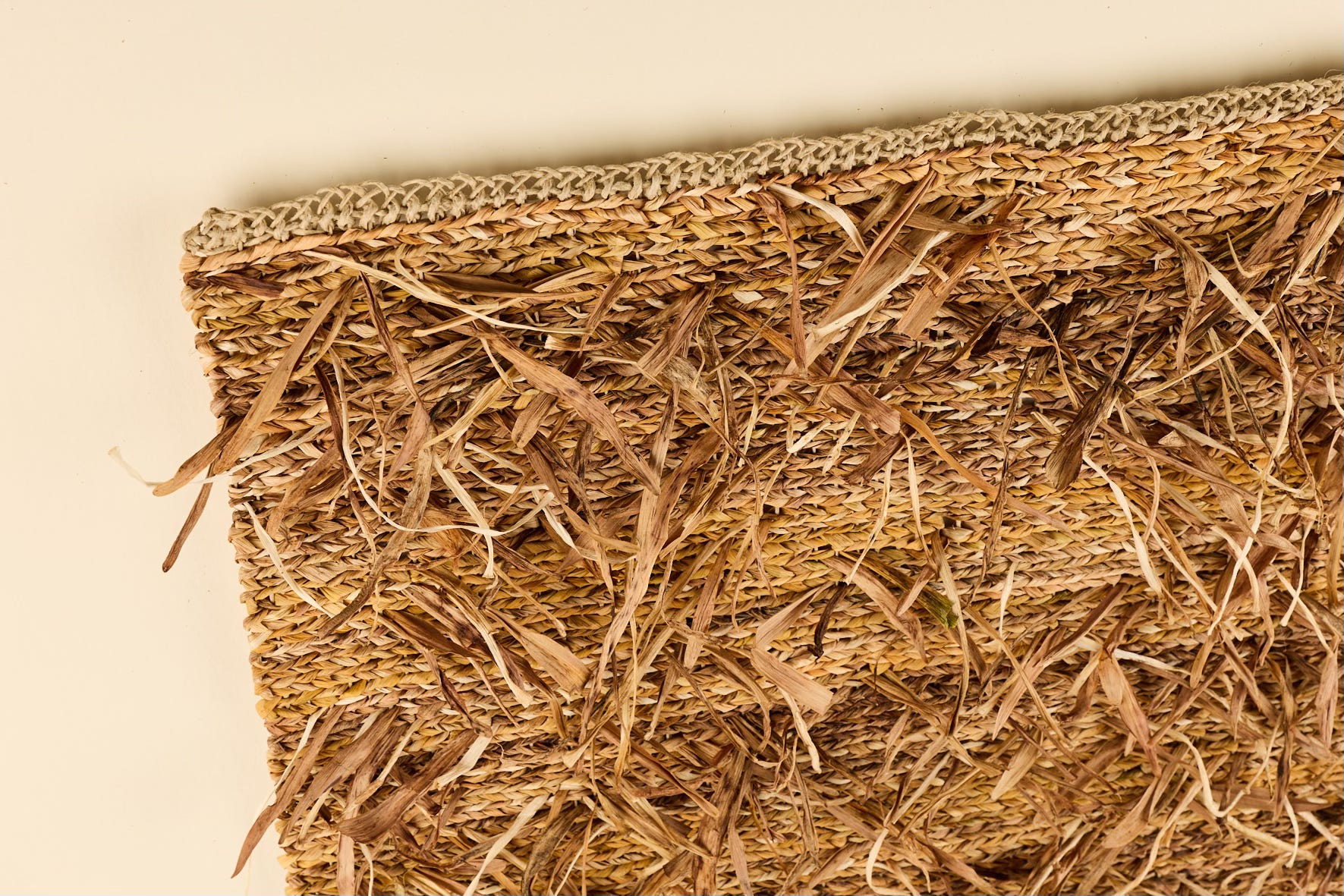
In the studio over the last couple of weeks, I’ve been working on another piece in my apple wood and bindweed Arc series. This is the largest so far and really makes the most of those curled, dried apple prunings that take on the form of the metal barrel in which they are put to dry – shown in my last post. This piece makes use of the previous winter’s prunings, while the recent batch start to slowly dry. The new Arc is now at Gallery 57, in Arundel, ready for the forthcoming show TEN, which opens on 11th April. Arc iv accompanies the set of four daffodil weave pieces I made last summer (and wrote about in July’s post), during a concentrated period of working with daffodil leaves and stems.
My teaching year has now begun, following a quieter time over the winter. I was in Denmark recently, working with the basketry group Baskets4Life and I will be in London this weekend to teach at the West Dean Bloomsbury campus. There is a full list of courses for this year on my website here. I’m looking forward to teaching in Shropshire, West Sussex, three different locations in North Yorkshire, Leeds, near Bath and Oxford this year, in arrange of different studios and locations. Alongside the in-person teaching this year, I am developing a new online signature course with Take Two. I recorded an online ‘Friday Feature Artist’ talk with them several years ago, which is still available to watch and I am really pleased to be working with them again, but in a much more in-depth way. All the online teaching I’ve done to date has been self-led, done on a very basic level, in a way that I felt comfortable organising myself. This new course is supported by a team of people and will cover a whole host of the different techniques and processes that I use in my work. We’re still developing the detail of the course. And it won’t start until the very beginning of 2027. But if you are interested and want to register that interest so that you hear about when booking will open, you can do that here. And if you are looking even further ahead than that, bookings are now open for my Weaving the Land workshop in France, autumn 2027.
Hi Alice, just to say how much I enjoy reading your posts. They have a serene time. I loved the recent one about reweaving nesting materials. Do you know the book Nests by Susan Ogilvy? I've also recently read one by Anna Chapman Parker Understorey. It's an artist's perspective on "weeds" You might find it interesting. All the best Cathy McCall.
How exciting, what fun you’ll have! We put our tunnel up a few years ago, fortunately with guidance from a pro. When you come to put on the plastic, choose a warm, sunny day and make sure you stretch it as tight as possible over the frame as this will help it last. Pad out any joints in the frame and use heat tape where the plastic sits on it. So much fun ahead, good luck.