
Pruning Day

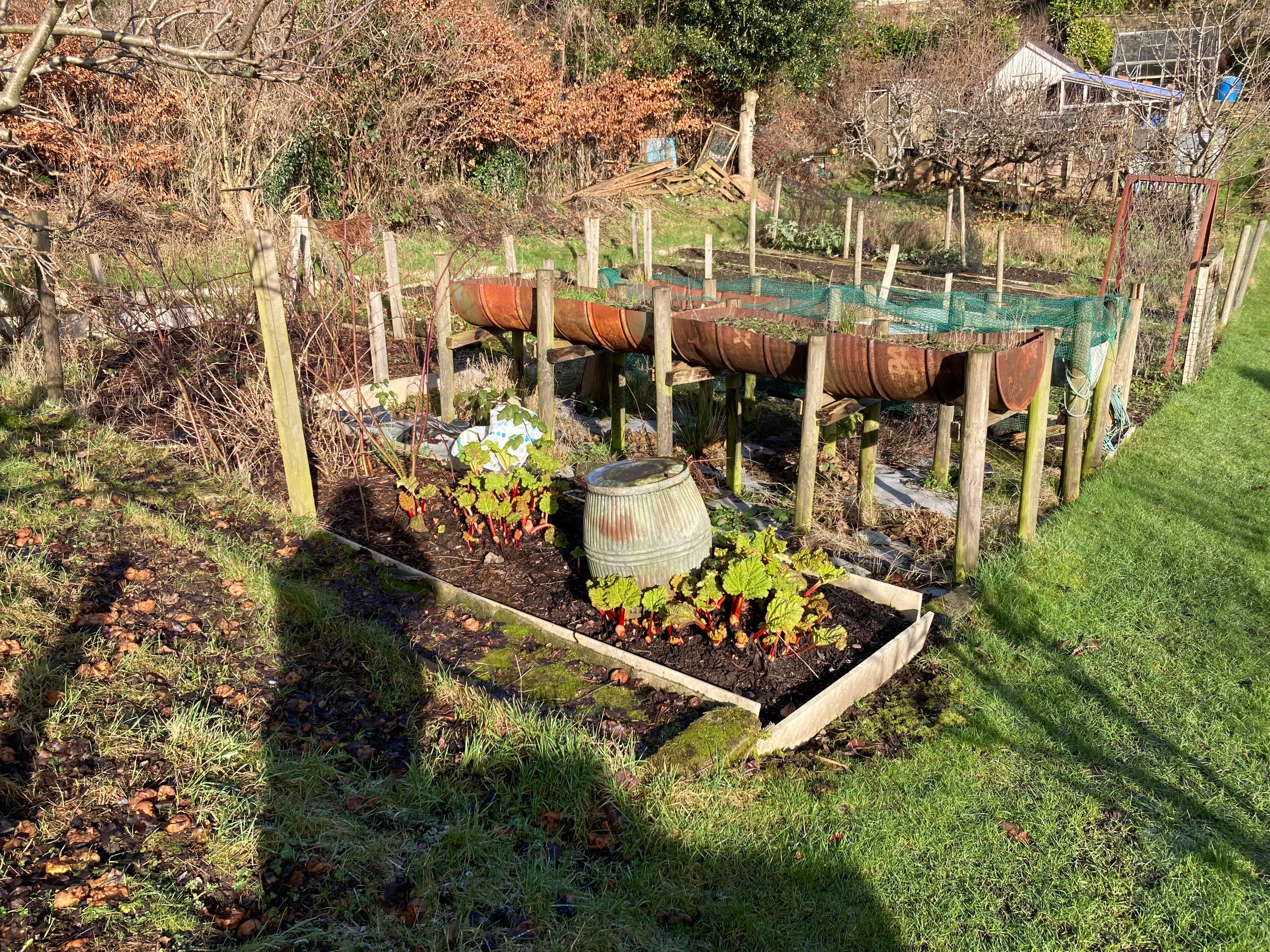
The day was forecast as the first sunny day for what feels like weeks. Sunshine was not essential, but an added bonus. This was the day set aside to prune the apple trees before then working away for the rest of the month. After days and weeks of rain and grey gloom, a day on the plot with blue sky, winter sunshine and no wind was restorative and satisfying. It started with frost, dusting the grass and soil with white, which stayed in the shadows well into the middle of the day. The lack of wind meant that the sunshine warmed us a little as we worked.
Pruning the apple trees has become an important milestone in my allotment year. Not only is this about maintaining healthy and productive fruit trees. It is also an opportunity to harvest material that will be used in the studio over the coming year. Apple wood, and specifically the long, thin, whippy growth that the trees develop in response to last year’s trim, has become a staple in the range of plant materials I like to work with. It’s good to keep this growth in check, so that the trees don’t get too high and I can make good use of most of it, rather than add it to a brash pile to rot down.
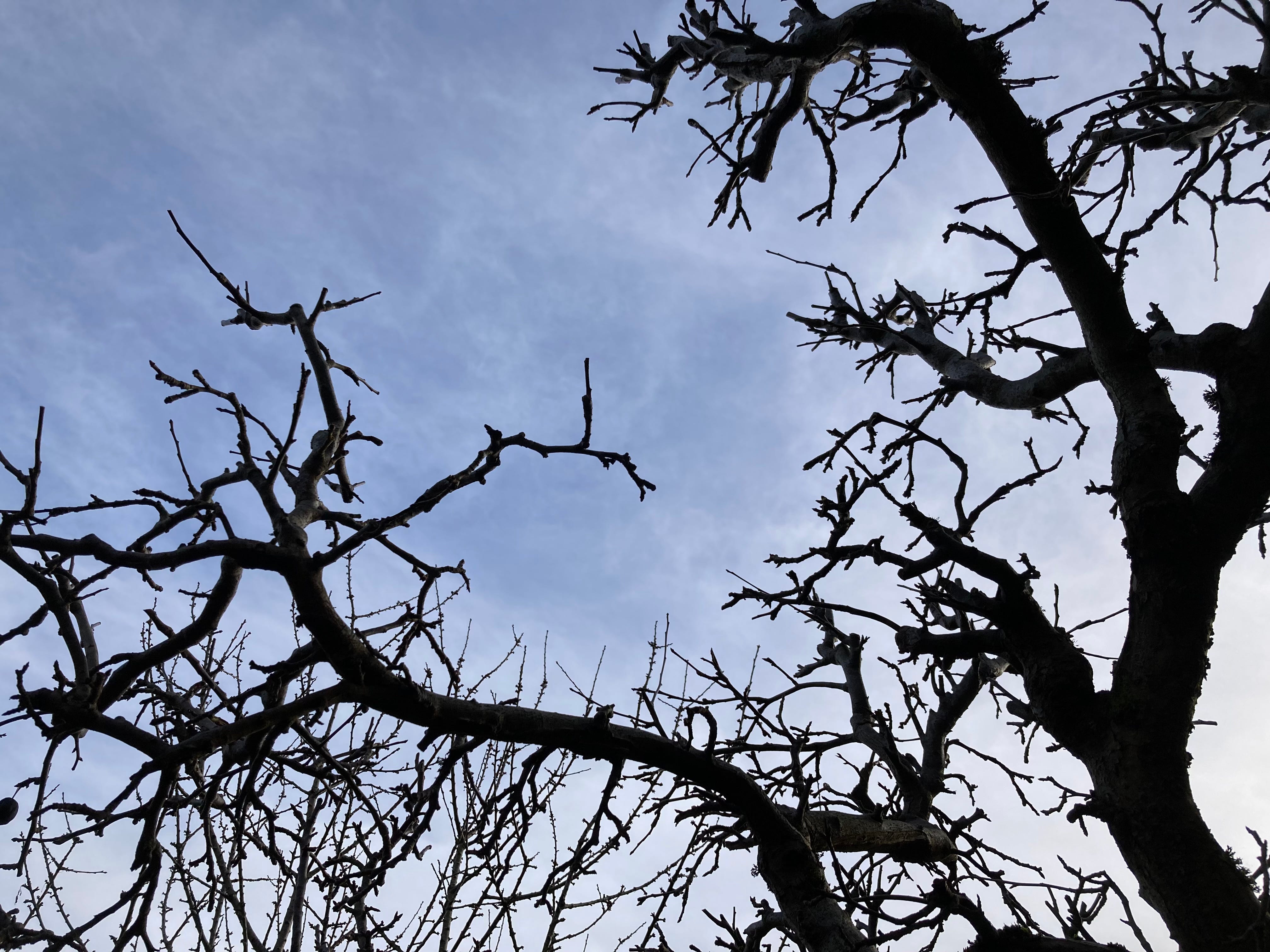
I always feel a little daunted before I start pruning. Here are 10 apple trees (although they are modest in size) and it feels like a big job. But once I get going, I really enjoy the process. There is something very satisfying about the transformation of the trees, knowing that this also helps to keep them growing and producing fruit well. I love looking up through the trees’ bare branches against the blue sky.
My daughter was there to help, which meant we could get it all done in a day. While I pruned, moving about between the trees and working out where to put the ladder when it was needed, she cleared and sorted the cut branches. The remains of the fallen apples, which blackbirds are still enjoying on the ground, made for squelchy conditions underfoot. The daffodils that are poking up through the grass under the trees were to be avoided, so we took care where we stood.
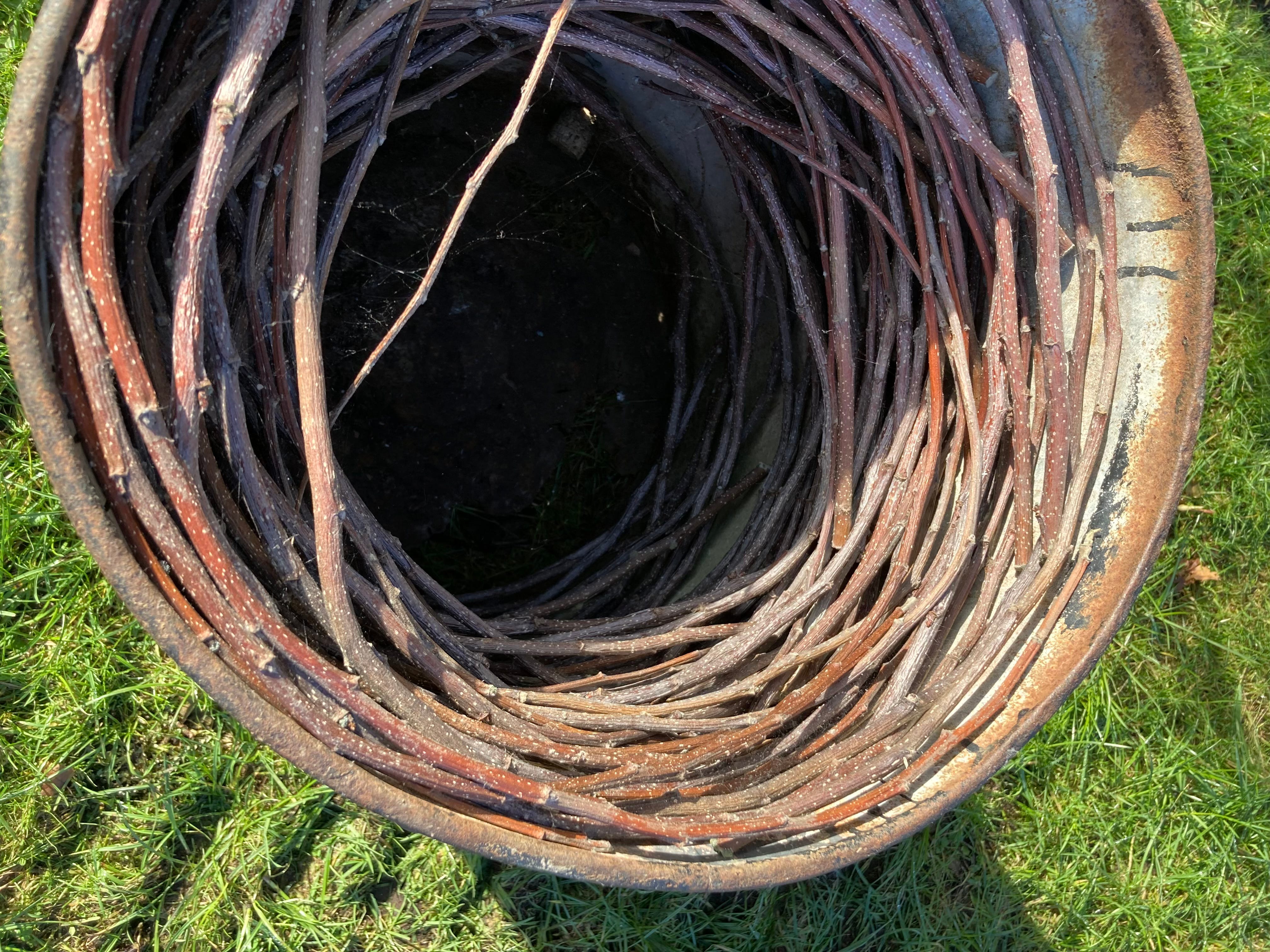
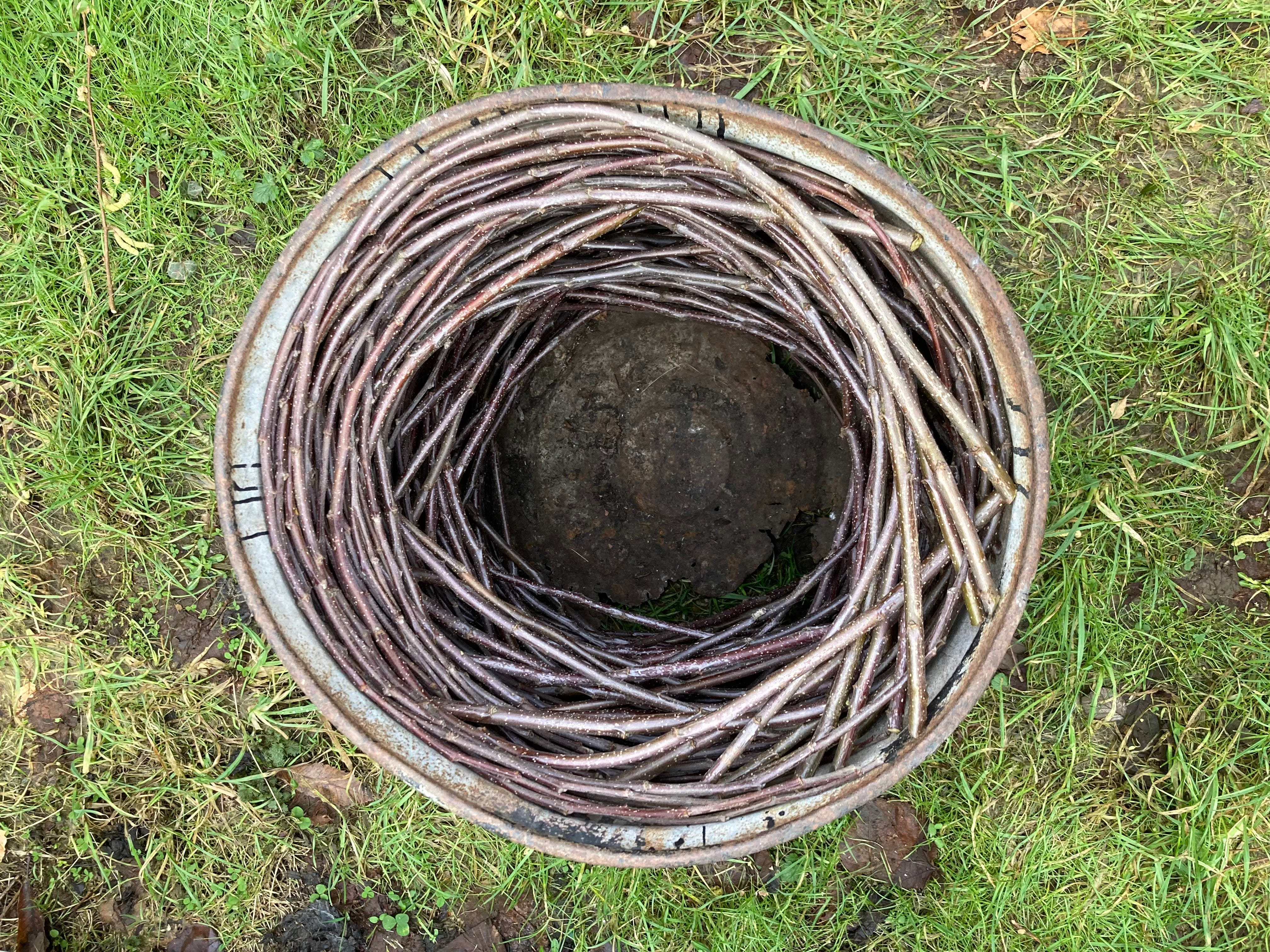
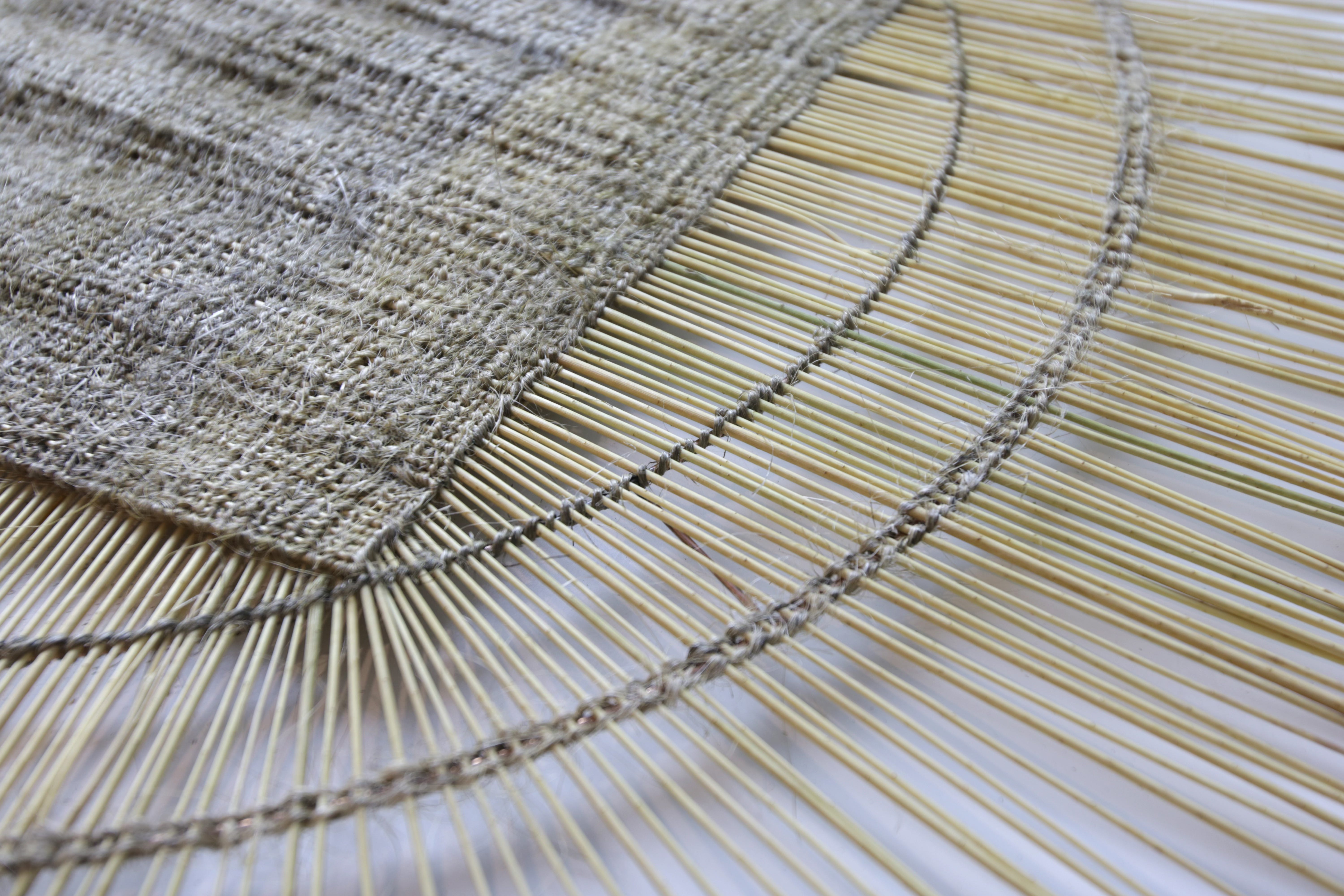
Whereas most people would just discard the prunings, we sorted them into piles of different lengths. The longest and straightest were curled inside a metal bin that lives in the shed. They will dry inside the curved vessel, taking on the shape as they do - the image above shows the prunings from last year, now dried. I enjoy pushing the stems into this curved form, building up the sides. It forms something reminiscent of one of Andy Goldsworthy’s enclosed branch-filled spaces, on a smaller scale. Shorter stems were curved into tubs and pots in the shed, also to dry with the curve set in their physical memory. The remaining longer stems were left to dry upright in another large bin in the shed. Anything shorter than about 50cm was saved to use as kindling for the fire at home. Some larger chunks of one tree that was rotting in places were cut up for firewood. A few sections of branch might make future wooden needles. The final bits of leftover brash make habitat piles down the side of the plot. It’s good to make use of everything that I’ve removed from the trees. The final task will be to take wood ash from the fire at home and sprinkle it under the trees and around the soft fruit bushes at the plot, to act as a fertiliser, and to complete the circularity of this to-and-fro between the trees, the kitchen, studio and home.
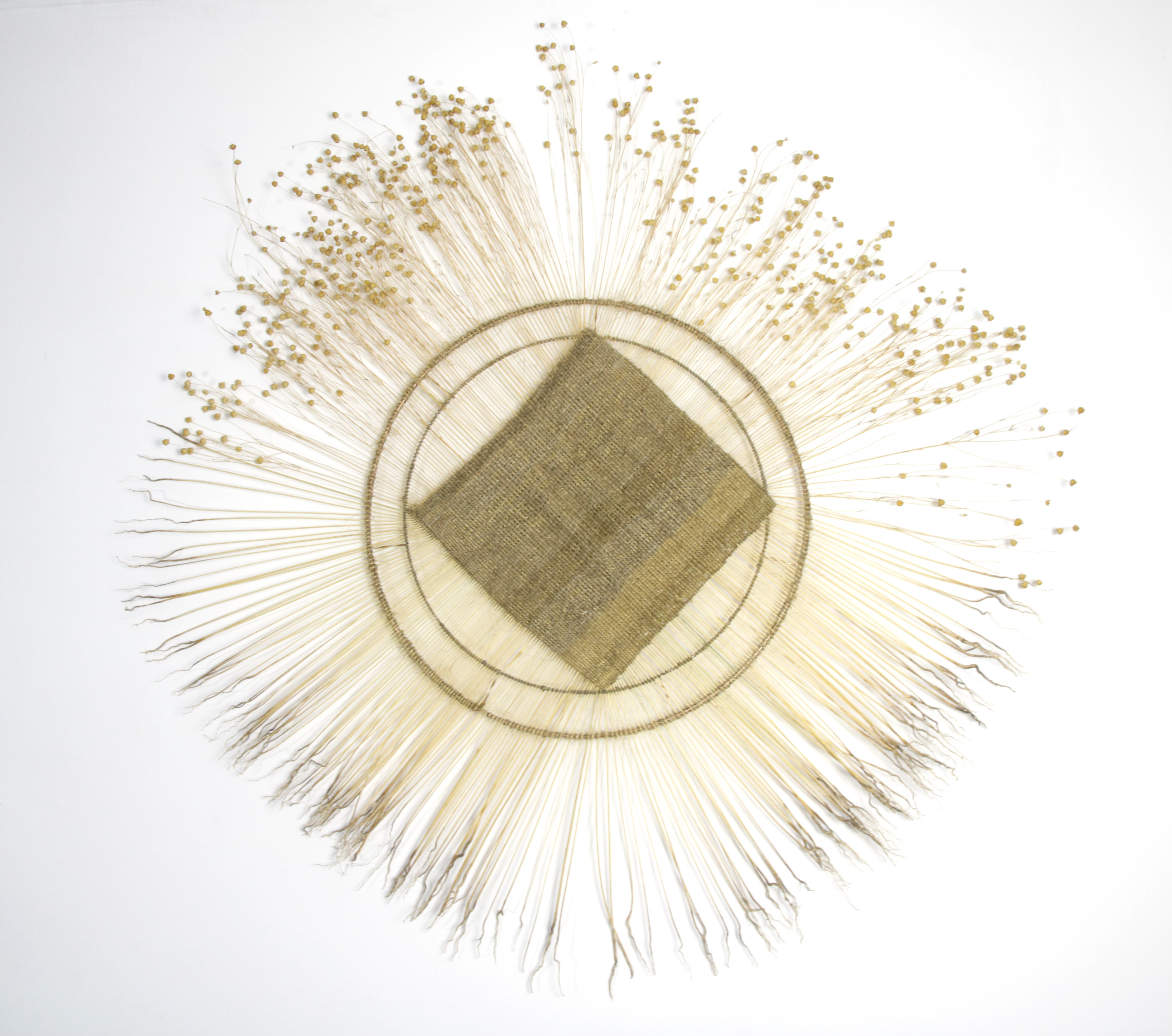
The end of February is the time for Collect presented by Crafts Council at Somerset House, London and I’m pleased to have work shown there by Jaggedart. I will be showing Flax Circle Square, incorporating whole flax stems with twining and lashing in hand processed flax fibre. This piece is a next step on from Flax in the Round, which forms part of my Flaxen exhibition. Working on any piece will lead to other ideas and questions about what to make or try next. I’m enjoying thinking about the circular form and how that can interact with woven sections that form straight or curved lines. I had seen or tried various basketry techniques that fix two sets of perpendicular spokes and wanted to test this out with my flax stems. Working experimentally towards an exhibition deadline is perhaps not to be recommended but was necessary in the time available.
It’s a fragile piece which I wanted to show without a frame. Once the work was made, I spent many hours constructing a bespoke box for the piece, to transport and store it safely. I am almost as proud of the box as I am the work itself! This kind of task is a hidden one, but an essential part of being an artist, particularly one who makes large or awkward work.
Jaggedart - Room W2 West Wing, Somerset House, London
27 February – 1 March
Previews 25-26 February (by invitation only)
I will be at Collect on Friday 27th February. Do come and say hello if you’re visiting.
Your Flax Circle Square piece is stunning! Thanks for sharing all of this. Very inspiring.
Hi Alice, I really enjoyed reading about pruning day, but the best part was seeing your incredible circular Flax piece at the end. It's stunning!