

I can’t remember when it last rained properly. Apparently, there was rain last weekend, but I was away and there was no evidence of it on my return. I’m watering almost daily. The polytunnel and greenhouse need it of course. I’m also watering the brassicas that are not yet fully established and the courgettes and beans some days. Everything seems to be struggling with the continued heat. Then there are the deer, which have been nibbling here and there. I’ve had to net the climbing beans as the deer were eating the leaves and weakening the plants before they’d started producing beans. The soft fruit was less bountiful than previous years. I suspect this is partly due to the deer eating shoots early on. So, crops are down generally.
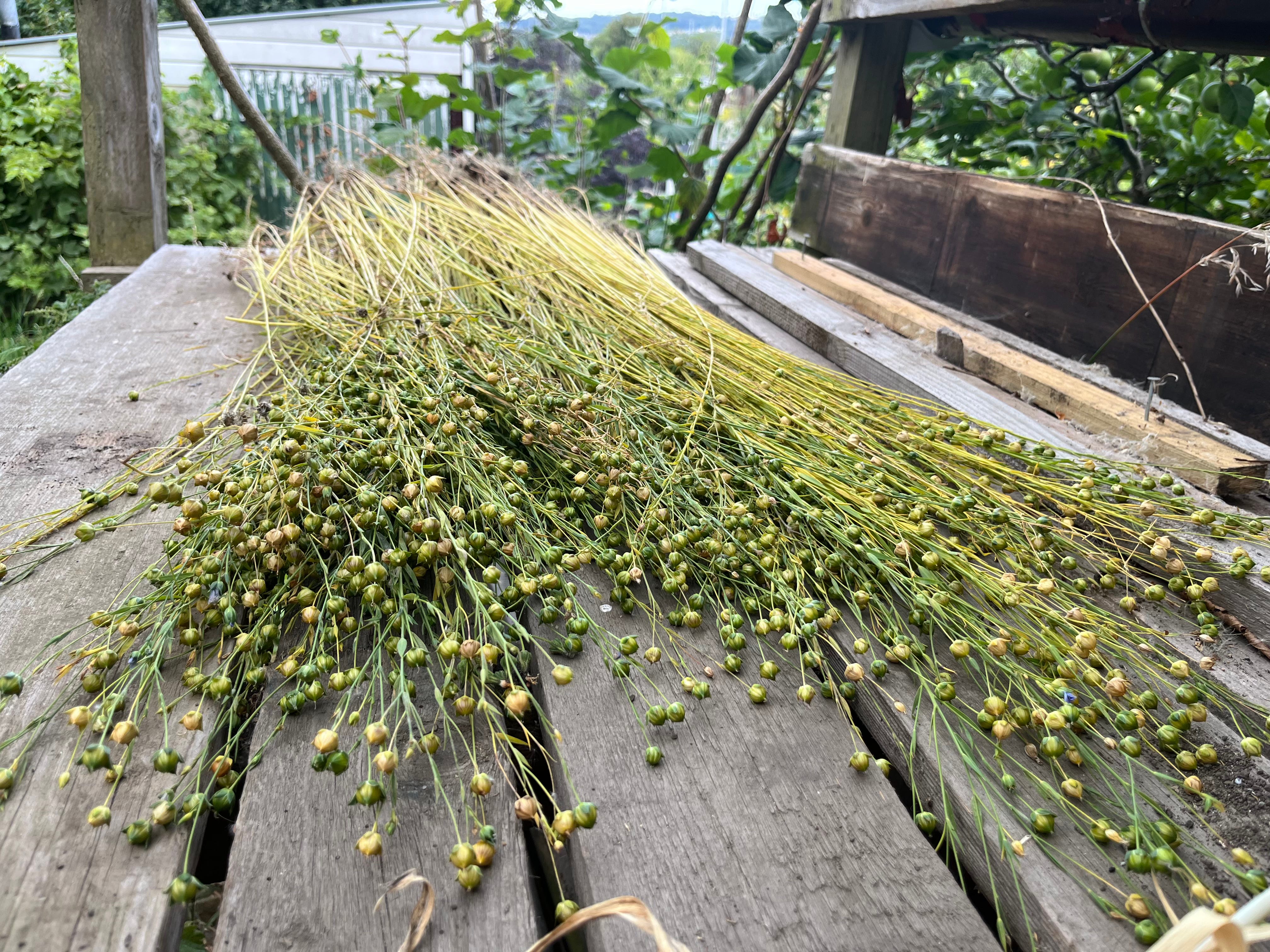
I pulled up the flax on its 100th day after sowing and it is laid out to dry (image above). 100 days is the convention, although weather can affect the exact time it’s ready. I worked out when the correct day was and the timing worked: The seeds were set, the stems and leaves yellowing and it coincided with me not being away teaching. This year it’s not a great crop. I had to make barriers round the bed to stop the deer trampling it early on. At its full height it’s relatively short and mixed in stem thickness. It just feels a bit pathetic. This is Ok though. I still have flax from previous years that I haven’t processed, so I can cope with a lean year. I almost considered not planting any this year, but that just wouldn’t have seemed right. I love the rhythm of growing a small amount of flax each year and seeing it grow into elegant plants with their delicate blue flowers. It makes a lovely addition to the other things I grow, and it has become quite a symbolic crop for me. It’s satisfying to grow, even if the result is not as substantial as it might be. I haven’t decided yet whether to ret this batch or not. I’ve found it useful to have some unretted stems to use in my work over recent years, so I may just keep this batch dried and ready for studio use. If I use it unretted, it is combined with processed fibre, so I can take advantage of the structural strength of the dried stems but join it with processed fibre.


I spent a day demonstrating at the Great Yorkshire Show a couple of weeks ago. This was with Ellekers Wood, who organised a series of different craftspeople to demonstrate each day of the show. I took my flax breaker along and spent the day showing people how flax is transformed from stiff dry stems to a soft fibre that can be spun and woven with. It was quite an eye-opener to talk to a lot of people who just had no idea where the cloth they wear comes from, that it comes from a plant even. I had some really interesting conversations and I hope those small moments helped some people to connect a little with the materials they use daily and perhaps take for granted.
I’m looking forward to demonstrating flax processing next at Tear Up Festival in late August. I’ll be there over the festival weekend with my flax breaker and looking forward to some more material conversations.
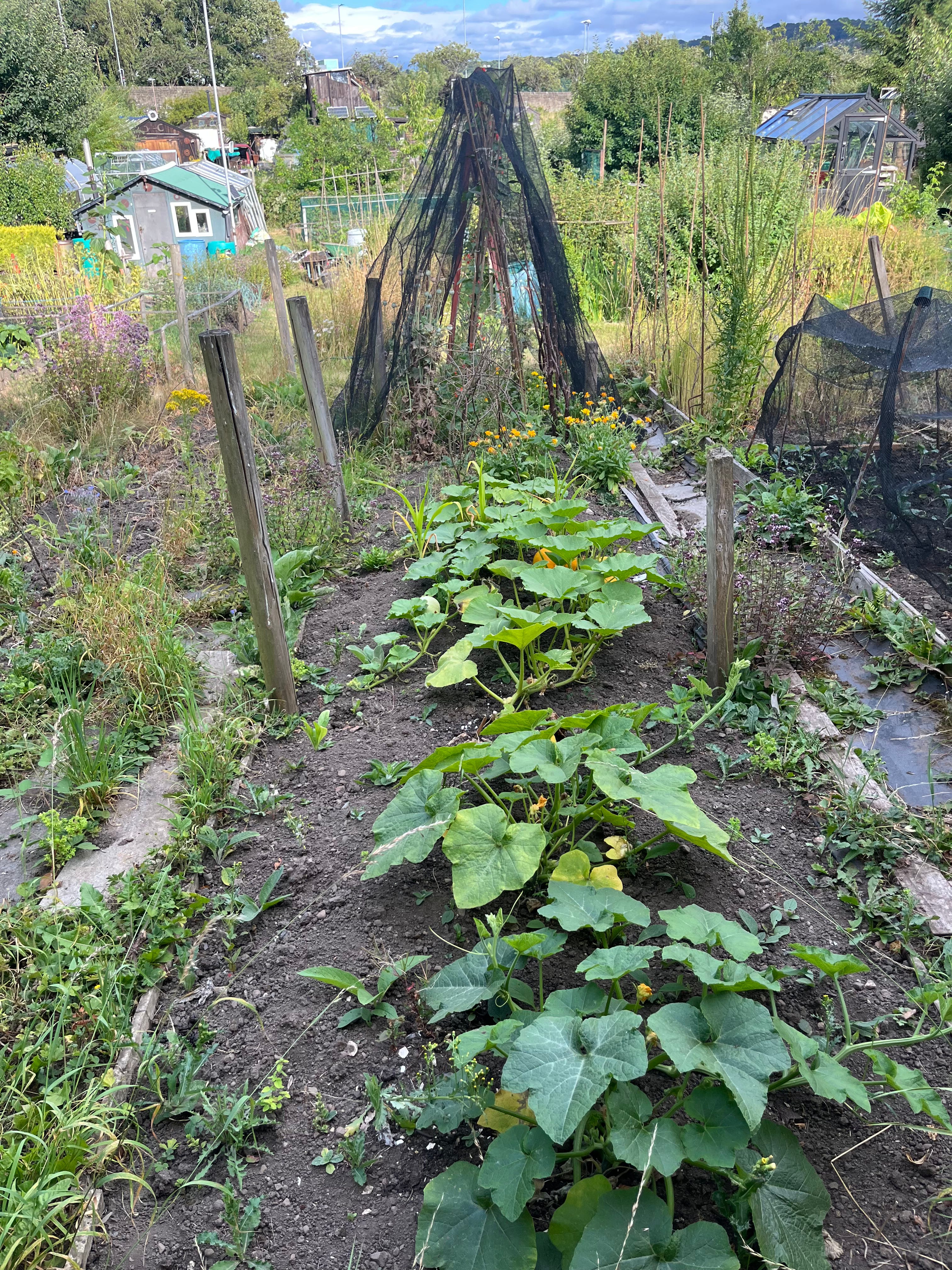
The plot, in its dry and slightly unkempt state, is looking pretty scruffy. This wouldn’t normally bother me as it’s a private and functional space – it’s certainly no show garden - but I am filming next week with Take Two. We will be filming at the studio and on location at the plot and I’m feeling a little more self-conscious about the state of the place. I’ve tidied the shed a little – swept away some of the cobwebs at least and shifted some of the ‘stuff’ accumulated in the small amount of floor space. The growing beds are weedy and dry and not looking their best. But this is the truth of it at this time of year. The weeds are keeping numerous pollinators busy and fed. There is much life and activity and the place is richer for it. By this point in the summer each year, things are past their best, busy going to seed or intent on fruiting. It’s rarely lush in late July.
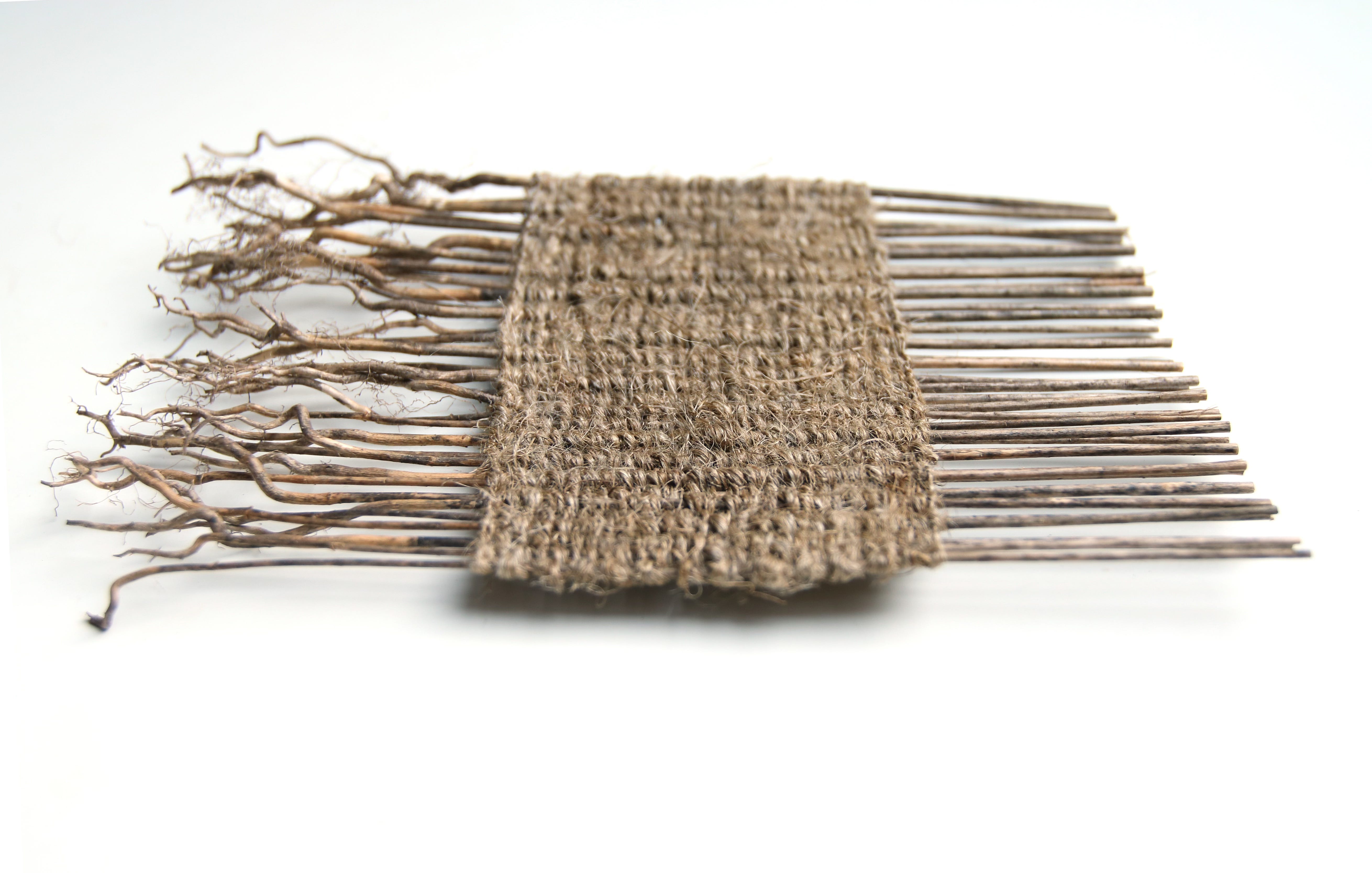
I’ve been harvesting bindweed when I can, as well as nettle fibre. Most of the nettles I’ve stripped have gone to workshops I’ve taught recently, where we need pre-prepared fibre to work with. The summer somehow runs away in a mix of teaching trips, work and family commitments. There is not much time for the studio and making. I am trying to finish a series of pieces that will go to Stroud as part of the next Textile Study Group UNmaking exhibition in September. These ‘Materials for a Nest’ are a direct response to my deconstructed and re-woven ‘Nest’ (which is on show all this year as part of Wonder of Birds). I had intended to make five pieces in the series, but three are all I have time for. I’ll make the other two at a later date as the exhibition will go on elsewhere and changes each time it shows.
Meanwhile, there is rain in the forecast for next week…
Flaxen at the Knit & Stitch Shows
8 – 11 October at Alexandra Palace, London
I will be doing a gallery tour on 8th October – booking here.
For £2 off show tickets use Discount Ticket Code: ALICEFOX
19 – 22 November at Harrogate
I will be giving a gallery tour on 20th November – booking here.
For £2 off Harrogate show tickets use Discount ticket code: WT26
Instructions for using discount/comp codes
Visit https://www.knitandstitchshow.co.uk/london/
Go to Book Tickets, select Admission Tickets, choose One Day Tickets, then Standard Tickets, and chose the preferred day for your visit. Submit the code in the promotional code box at the top of the page, then select the number of adult / concession tickets.
I am so looking forward to your Take Two course. I have done several of their courses and they do such a great job. They are a bit on the expensive side but they are sill value for money. I have increased my skill level so much with them and I wouldn’t worry too much about how the allotment will looks because the students will be focused on technique. I tried growing some linen flax in our last summer but my crop was a bit pitiful. I am hoping you include retting in your course.